Connected-Care-Why-the-Software-We-Give-Uber-Drivers-Beats-the-Software-We-Give-Doctors
Show Notes
Show Notes: Heartwired – Emotionally Intelligent Leadership
Episode Title: Connected Care: Why the Software We Give Uber Drivers Beats the Software We Give Doctors
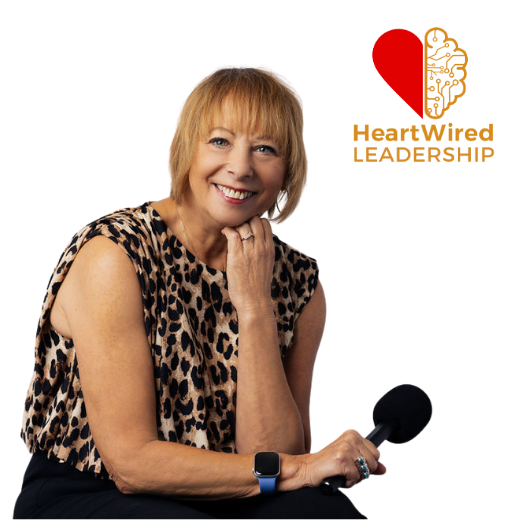
Host: Dr. MJ Vignone
Guest: Dr. Fatih Mehmet Gul, Physician Executive, Country CEO of Apex Health Qatar & Author of Connected Care
Episode Summary
At a conference in Chicago, Dr. Fatih Mehmet Gul heard a line that stuck with him: the software we give Uber drivers is better than the software we give our doctors. In this episode of Heartwired, Dr. MJ sits down with Dr. Gul, a physician executive with more than 20 years of experience building, commissioning, and running hospital systems across Turkey, Saudi Arabia, the UAE, and Qatar, to unpack what that line says about technology, leadership, and care.
Dr. Gul is Country CEO of Apex Health Qatar, leading an 800+ bed hospital network, and CEO of The View Hospital, in affiliation with Cedars-Sinai. A physician who moved from the bedside into hospital leadership, he is the author of Connected Care: A Digital Transformation Roadmap that Elevates Human-Centred Healthcare. The title comes from a web domain he registered in 2013 without any plan for it. Years later, seeing what he calls disconnected care across the industry, he started to prescribe the opposite.
The conversation covers his three-part framework of caregivers, patients, and community, why new technology can put a barrier between doctors and patients, the lessons from his own team's early mistakes, what aviation and banking get right, and how his hospitals used AI to predict patient no-shows. Although the examples come from healthcare, Dr. MJ notes that the lessons apply to any organization rolling out new technology.
Key Takeaways
Care Is Disconnected, and Technology Can Make It Worse
Dr. Gul describes a healthcare industry where caregivers are running operations with little connection to the leadership making decisions. Changes show up in the office overnight and no one asks them first. That disconnect reaches patients, too. Demand is rising as populations age and health awareness grows, doctors' workloads are climbing, and hospital managements reach for technology to help. In his experience, too often those solutions create a barrier: doctors looking at the screen and not at the patient, and patients filling out forms on kiosks and still unable to find what they need.
The Framework: Caregivers, Then Patients, Then Community
Dr. Gul's framework starts with understanding the caregivers' problems, because if the caregiver doesn't smile, the patient won't either. Next is understanding what the patient actually experiences, since a hospital can invest in many things the patient never feels. The third is staying connected with the community and with government and local authorities. He notes that the Middle East has built amazing hospitals, but if they are disconnected from the community they serve, the investment doesn't deliver its value. He says the same pattern appears in the US, UK, and South Asia.
Technology Can Help Leaders Listen at Scale, but Only With a Human Lens
Dr. Gul's move from bedside physician to CEO taught him to understand people's concerns, and he says that frontline teams know the problems well and are waiting for leadership to ask. He argues that technology and AI can help a leader listen to a thousand people at once and build better leadership skills, but only if they use what he calls the human touch lens. Without it, leaders just continue their previous habits. Dr. MJ connects this to social awareness and ethical decision-making: knowing who you serve, what they need, and the impact of your choices.
Solutions Have to Talk to Each Other
Dr. Gul and his team learned a hard lesson while building a "smart hospital" patient journey with milestones and touchpoints. Even after checking with patients along the way, the solutions only worked if they communicated with one another. Otherwise patients end up giving the same data again and again on every floor. He wrote the details in his book so others can avoid the same mistake. He also suggests learning from aviation and banking, which spent heavily to understand their customers and have made digital service comfortable for people of every age, a gap healthcare still has to close.
Design for the Actual Patient
All the investment in technology and transformation, Dr. Gul says, is made for one person: the patient. An app with a tiny font won't work for an older person, and a complex interface won't work for a busy doctor. Not every patient has a smartphone, particularly in underserved communities. He cited indoor navigation apps that are harder to use than the old wayfinding signs. His request to technology providers and hospital leaders is to keep the human touch first, because technology will keep evolving, and investing for its own sake just frustrates people.
The Human Touch Matters Most at the Hardest Moments
Waiting for lab results is stressful, and Dr. Gul wants technology to treat it that way, with nudges and communication that offer reassurance and tell people what to expect. He gives another example: pharmacy counseling that is rushed through in 30 seconds. He'd like hospitals to create a connected service so that a patient can stay in touch with the pharmacist after leaving, ask about side effects and how to take the medication, and avoid another doctor's visit. Dr. MJ adds a story from a recent event, where a physician's son described how AI helps his father with diagnosis and notes so he has more time to support patients through the emotional side of a cancer diagnosis. Dr. Gul agrees that this kind of use is already happening.
Why Uber Gets It Right
Uber spent time with its drivers to understand what they needed and worked to reduce the number of clicks. EMR vendors, Dr. Gul says, often don't talk with doctors and keep adding functions, until the screen feels like the cockpit of a Boeing 737. The answer, in his view, is to listen to the end user, value their feedback, and build the solution with them. He sees ambient listening as one encouraging step, since it helps doctors deal with less of that interface.
AI Is a Transformative Solution, Not Another Software Package
Many leaders treat AI like another software purchase. Dr. Gul urges them to give AI the operational facts and ask how to manage things better. His example: patient no-shows. Instead of calling patients the next day to rebook, his team shared two to three years of visit data with AI and asked what to do. It produced a prediction tool, so when someone calls the call center, staff can see whether that person is likely to miss the appointment. For likely no-shows, the center books two slots instead of one. He advises leaders to start with the pain areas they already know, share the data with AI, and ask how to transform the process rather than just make it easier.
Memorable Quotes
"If your caregiver doesn't smile, your patient will not smile."— Dr. Fatih Mehmet Gul
"Connected care can only happen when we bring the human touch within this digital transformation."— Dr. Fatih Mehmet Gul
"AI is not a software solution, AI is a transformative solution."— Dr. Fatih Mehmet Gul
"I started prescribing a connected care for the benefit of our healthcare industry."— Dr. Fatih Mehmet Gul
This Week's One Thing
Dr. MJ's takeaway for any leader: before you choose a piece of software, talk to the people who will actually use it, whether those are caregivers and patients or employees and customers. Don't put a kiosk in front of a person in pain. Dr. Gul's addition: pick one pain point you already know well, share the data with AI, and ask how to transform it. Then use the time AI gives back to be the human touch.
About Our Guest
Dr. Fatih Mehmet Gul is a physician executive with more than 20 years of experience building, commissioning, and running complex hospital systems across Turkey, Saudi Arabia, the UAE, and Qatar. He is Country CEO of Apex Health Qatar, with accountability for more than 4,050 employees and an 800+ bed network that includes the Military Medical City Hospital operating contract, the Korean Medical Center, and The View Hospital, where he serves as CEO in affiliation with Cedars-Sinai.
His career spans the full arc of hospital development. He led the USD 500 million construction and commissioning of Fakeeh University Hospital in Dubai during the pandemic, took NEOM Hospital from construction handover to its first open-heart surgery in three months, and as CEO of Fakeeh Care Group shaped the strategy behind a USD 764 million IPO on the Saudi Tadawul. At The View Hospital he delivered breakeven within twelve months while reducing operating costs by 15%, and led the first private hospital in Qatar to earn JCI 8th Edition accreditation.
He holds an Honorary Professorship at UCL Global Business School for Health, has completed executive programmes at Harvard Business School and Cornell University, and was named to Forbes' Top 50 Healthcare Leaders in 2022, 2023, and 2025. He writes for Newsweek's CEO Circle, is the author of Connected Care: A Digital Transformation Roadmap that Elevates Human-Centred Healthcare, and hosts The Chief Healthcare Officer podcast.
Website: fatihmehmetgul.com
Book, newsletter, and podcast: connected.care
Book on Amazon: Connected Care
LinkedIn: Dr. Fatih Mehmet Gul
Connect with Heartwired
Email: [email protected]
Website: drmjheartwired.com
Subscribe: Don't miss an episode — follow on Spotify.
Share: If this conversation resonated, share it with someone navigating leadership in the age of AI.
Stay wired to what matters most and keep leading with empathy.Don’t forget to subscribe, leave a review, and share HeartWired with leaders in your network who are ready to lead with both heart and intelligence in our rapidly changing world.
Thank you for listening—see you next episode!
Listen & Subscribe
Listen to HeartWired on your favorite podcast platform and subscribe so you never miss an episode.